
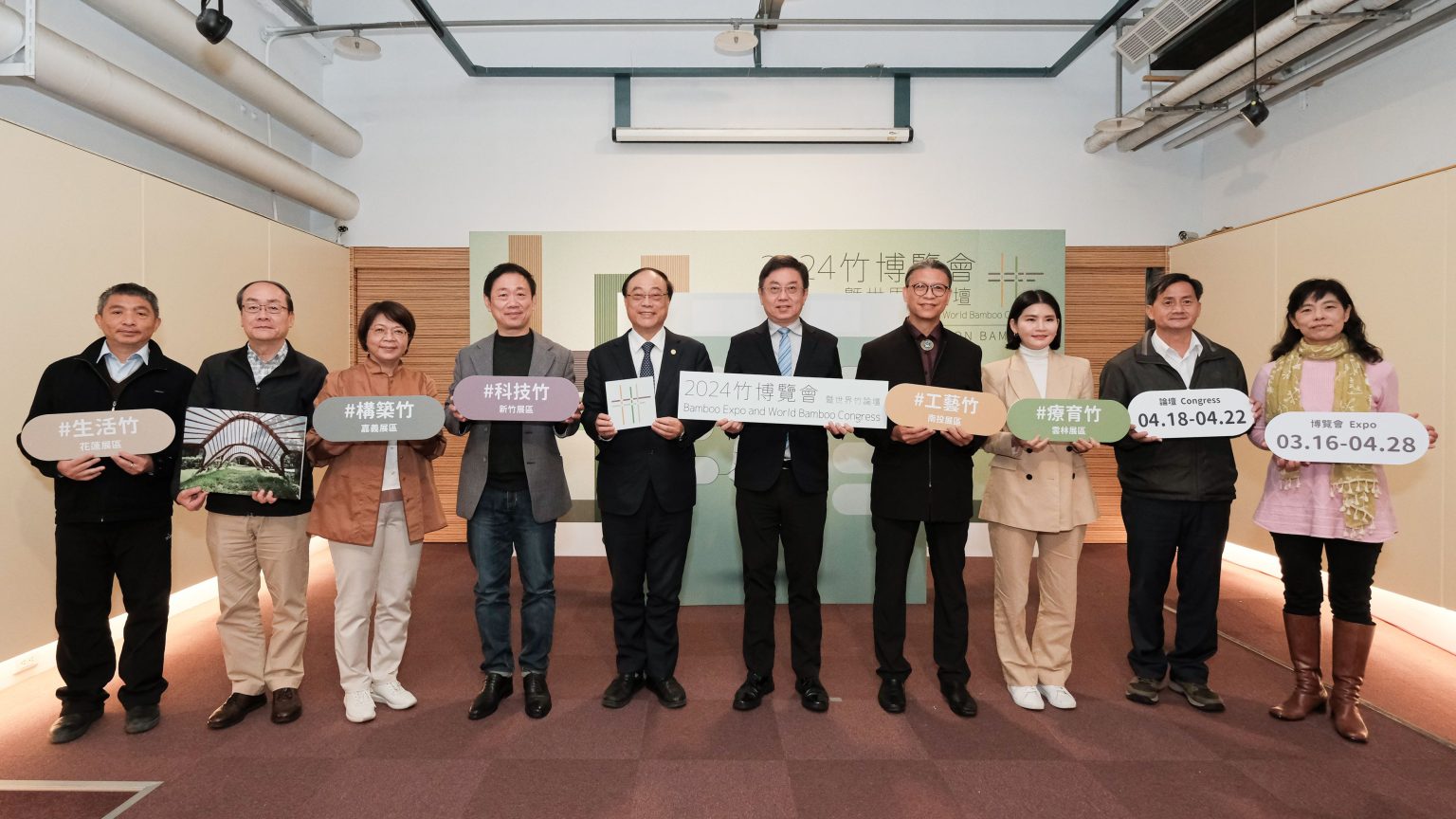
2024竹博覽會暨世界竹論壇於3月16日登場,活動橫跨新竹、南投、雲林、嘉義、花蓮五縣市,展出不同竹材於生活、工藝、建築中的多元應用,還有體驗與市集等活動。此活動由農業部林業及自然保育署攜手文化部國立臺灣工藝研究發展中心與臺灣竹會共同策劃執行,國立陽明交通大學不僅是此次活動的協辦單位,光復校區也是這次新竹展區的主要展場。
新竹展區:承先啟後,刻畫竹材未來的無限可能性
新竹展區主題為「竹的三次方」:新竹 X 陽明交大 X 竹子,包含國立陽明交通大學光復校區的島嶼構築展覽,及新竹將軍村的市集活動。島嶼構築共有六件竹構築作品展出,作品結合當代建築設計與竹藝技術,展現竹構的實驗精神和新風貌。希望透過新竹竹塹城的歷史根源 (承先) 及陽明交大所代表的創新性 (啟後) 刻畫出竹材未來的無限可能性,展現竹的綠色商業潛力。將軍村的市集活動則結合竹、木及各種自然媒材創作、綠活飲食等30家特色攤商及豐富的手作體驗,市集現場亦有竹林經營主題特展。
減碳生活:讓竹結構融入日常
林業保育署署長林華慶表示,全世界竹林總面積有百分之七十就在亞洲,台灣擁有60多種竹,竹材資源豐富,除了以竹代塑,還可運用於工藝、建築、生活用品,身心靈療育等各方面。
新竹展區的策展人葉育鑫(Hill Yeh)也表示,竹子在台灣茂密的森林中廣泛存在,是一種獨特的環境、文化和工業優勢,而將展品移至市中心附近是一種將竹結構帶入日常生活的方式,從而使當地人重新熟悉長期的民間建築傳統。
台灣竹會理事長、國立陽明交通大學建築所所長許倍銜(Pei-hsuen Hsu)則認為,竹子作為建築材料的範圍和潛力正在不斷擴大,不斷改進方法和不斷開發連接器等關鍵部件,有助於充分利用竹子,運用於建築或手工藝品上。
像是座落於陽明交大各系所與第二餐廳之間、人潮絡繹的草坪上的一件特色作品「蜷蜷亭」(Rolling Pavilion),由建築研究所助理教授曾令理所設計,以剖竹取代竹管,支撐起巨大的圓弧結構,由地面生長出自然線條感,建構出自由曲度的有機空間型態,試圖創造出駐留節點,提供校園內學子休憩、飲食甚或是舉行臨時性活動之場域。
世界竹論壇:逾200位專家共同探討綠色經濟
除了竹作品展覽,4/18起至4/22也將迎來第十二屆世界竹論壇,共有30個國家200多位竹業領域專家共聚一堂,探討在國際減碳趨勢發展過程中,竹的綠色經濟、加工製造與創新應用,重塑次世代竹文化減碳生活新風貌。
此次論壇主題聚焦在「永續發展與綠色經濟」、「科技與加工創新」、「當代設計與應用」三大主軸,並扣合竹產業的三生:生態、生產、生活。論壇現場亦將設置竹產業商展,期望讓與會者感受竹產業於臺灣的豐富樣態。
台灣竹會理事長許倍銜說:「此次活動視覺設計呈現了竹子五個顏色,也就是五個縣市展區交織出的竹文化 ,期待藉由活動重新梳理台灣竹產業趨勢,既國際且在地。」
Taiwan Welcomes the First Bamboo Expo and World Bamboo Congress! Hsinchu Exhibition at NYCU Illustrates Carbon-Reducing Lifestyle with Bamboo
The 2024 Bamboo Expo and World Bamboo Congress kicked off on March 16th, spanning five counties and cities, including Hsinchu, Nantou, Yunlin, Chiayi, and Hualien. The event showcased diverse applications of bamboo in daily life, crafts, and architecture, alongside activities such as experiences and markets.
Co-organized by the Forestry and Nature Conservation Agency and the Ministry of Culture Taiwan Craft Research and Development Institute, in collaboration with the Taiwan Bamboo Society, the event was held at the National Yang Ming Chiao Tung University (NYCU), with its Guangfu campus serving as the main exhibition venue for the Hsinchu area.
Hsinchu Exhibition Area: Embracing the Past and Picturing the Limitless Future of Bamboo
The theme of the Hsinchu Exhibition Area is “The Cubic of Bamboo”: Hsinchu x NYCU x Bamboo, encompassing the Tectonics of The Island at Guangfu Campus and market activities in Hsinchu’s Jiangjun Village.
The Tectonics of The Island features six bamboo artworks that combine contemporary architectural design with craftsmanship, showcasing bamboo construction’s experimental spirit and new aesthetics. The historical roots of Hsinchu’s Bamboo City (embracing the past) and the innovative representation of NYCU (picturing the future) aim to depict the limitless possibilities of bamboo and demonstrate its green commercial potential.
The market activities in Jiangjun Village combine bamboo, wood, and various natural materials for creative purposes alongside 30 distinctive vendors offering green cuisine and enriching handicraft experiences. Additionally, a special exhibition at the market showcases the theme of bamboo forest management.
Carbon Reduction Lifestyle: Integrating Bamboo Structures into Daily Life
Hua-Qing Lin, Director-General of the Forestry Bureau, stated that seventy percent of the world’s bamboo forests are in Asia, and Taiwan boasts over 60 bamboo species. With abundant bamboo resources, Taiwan can utilize bamboo not only as a substitute for plastic but also in various aspects such as crafts, architecture, daily necessities, and holistic wellness therapies.
Hill Yeh, the curator of the Hsinchu Exhibition Area, also emphasized that bamboo is widely abundant in Taiwan’s dense forests, presenting a unique environmental, cultural, and industrial advantage. Moving the exhibits closer to urban centers is a way to integrate bamboo structures into daily life, thereby reintroducing the local population to long-standing folk architectural traditions.
Pei-hsuen Hsu, Chairman of the Taiwan Bamboo Society and Director of the Institute of Architecture at NYCU, believes that the scope and potential of bamboo as a building material are continually expanding. Continuous improvements in methods and the development of key components like connectors facilitate the full utilization of bamboo in architecture or handicrafts.
An exemplary piece like the “Rolling Pavilion,” situated between the departments of NYCU and the second cafeteria, was designed by Assistant Professor Ling-Li Tseng from the Institute of Architecture. Employing split bamboo instead of bamboo tubes, it supports a massive circular structure, growing naturally from the ground with organic curves, thus creating a freely flowing organic spatial form. The intention is to establish a focal point, offering students on campus a space for relaxation, dining, or hosting temporary events.
World Bamboo Congress: Over 200 Experts Gather to Explore Green Economy
In addition to the bamboo artwork exhibition, from April 18th to April 22nd, the 12th World Bamboo Congress will convene, gathering over 200 experts from 30 countries in the bamboo industry. They will explore the green economy of bamboo, its processing and manufacturing, and innovative applications within the international carbon reduction trend context. The aim is to reshape the new outlook of carbon-reducing lifestyles through the culture of bamboo for the next generation.
The theme of this congress focuses on three main axes: “Sustainable Development and Green Economy,” “Technology and Processing Innovation,” and “Contemporary Design and Applications,” all of which are integrated with the three aspects of the bamboo industry: ecology, production, and daily life. The forum will also feature an on-site exhibition of the bamboo industry, aiming to allow participants to experience the rich diversity of the bamboo industry in Taiwan.
Pei-Hsien Hsu, Chairman of the Taiwan Bamboo Association, remarked, “The visual design of this event presents five colors representing bamboo, symbolizing the intertwining bamboo culture from the five-county exhibition areas. We hope that through this event, we can re-examine the trends of the bamboo industry in Taiwan, both on an international and local level.”